
Why Choose an S19Jpro 100T PCB Water-Cooled Board Kit?
Article Summary
The S19Jpro 100T PCB water-cooled board kit is a component solution designed for mining equipment owners who want to improve heat management and explore liquid-cooling configurations for their ASIC miners. As mining hardware operates under continuous high-load conditions, excessive heat, uneven temperature distribution, and cooling-system limitations can affect equipment reliability and maintenance requirements.
This article explains the role of a water-cooled board kit, its potential advantages, compatibility considerations, installation preparation, and maintenance practices. It also highlights the factors buyers should evaluate before sourcing a cooling solution from Shenzhen Xinjinyi Technology Co., Ltd.
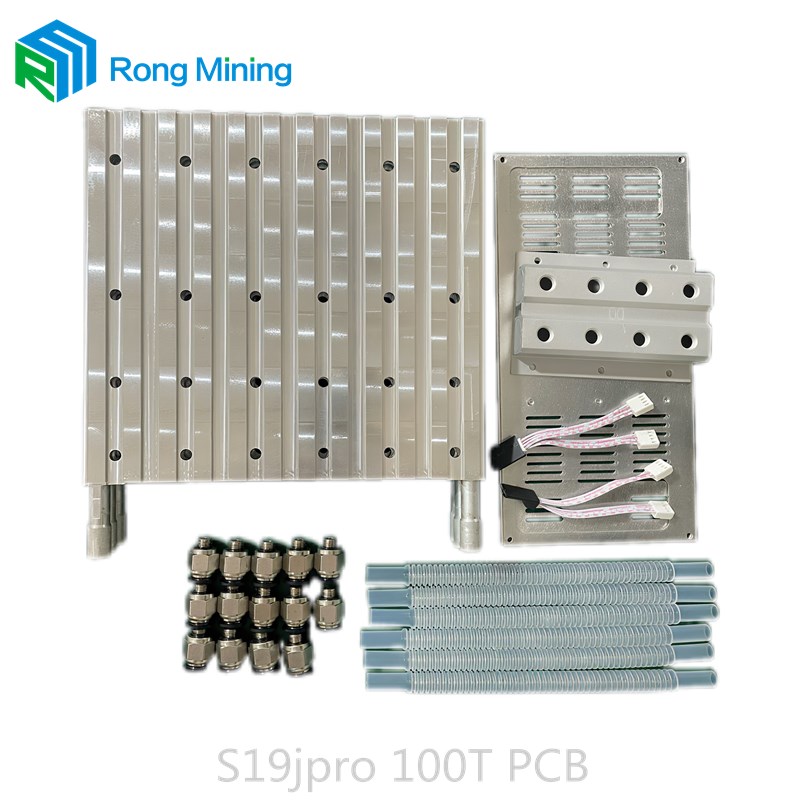
Table of Contents
- Understanding the S19Jpro 100T Mining Platform
- Why Does PCB Cooling Matter?
- What Is an S19Jpro 100T PCB Water-Cooled Board Kit?
- Key Benefits of a Water-Cooled Board Solution
- Important Components and Their Functions
- How to Evaluate Compatibility Before Purchasing
- Water Cooling vs. Traditional Air Cooling
- Installation Preparation and Best Practices
- Maintenance Tips for Long-Term Operation
- Common Purchasing Mistakes to Avoid
- Why Work with Shenzhen Xinjinyi Technology Co., Ltd.?
- Frequently Asked Questions
- Conclusion
1. Understanding the S19Jpro 100T Mining Platform
The Antminer S19J Pro 100T is a SHA-256 ASIC mining machine designed for cryptocurrency mining applications, including Bitcoin mining. Its processing performance depends on multiple hashboards working together with a control board, power supply, and cooling system.
According to the manufacturer's published specifications, the S19J Pro 100T has a nominal hashrate of 100 TH/s, a rated wall power consumption of approximately 2,950 W, and a power efficiency of 29.5 J/TH under specified test conditions. These figures help explain why thermal management is an important consideration for continuous mining operations.
| Specification | S19J Pro 100T |
|---|---|
| Mining algorithm | SHA-256 |
| Nominal hashrate | 100 TH/s |
| Rated power consumption | Approximately 2,950 W |
| Power efficiency | 29.5 J/TH |
| Power supply input voltage | 200–240 V |
| Original cooling configuration | Air cooling |
These are reference specifications for the original miner, not guaranteed performance figures for a modified water-cooled configuration. Actual operating results depend on hardware condition, cooling-system design, ambient conditions, and installation quality.
For mining farms operating multiple machines, even relatively small improvements in heat management and maintenance efficiency can become important over time. This is one reason why compatible water-cooling components attract attention from equipment operators.
2. Why Does PCB Cooling Matter?
A mining hashboard contains multiple ASIC chips that perform intensive calculations continuously. During operation, these chips generate considerable heat. If the heat cannot be transferred away efficiently, local temperatures may rise and create additional stress on electronic components.
2.1 Continuous High-Load Operation
Unlike many consumer electronics products, ASIC miners are generally expected to operate for extended periods. Their hashboards experience sustained electrical and thermal loads, making consistent cooling important for reliable operation.
2.2 Uneven Heat Distribution
Heat is not always distributed evenly across a PCB. Differences in chip loading, contact quality, airflow, and surrounding temperatures can create localized hot spots. A properly engineered cooling arrangement should provide consistent thermal contact across the intended cooling surfaces.
2.3 Maintenance and Downtime Concerns
Unstable temperatures, excessive dust accumulation, and cooling-system problems may increase troubleshooting requirements. For mining operators, unnecessary downtime can affect production schedules and equipment utilization.
Important consideration: Cooling improvements should be evaluated as part of the entire mining system. A cooling kit alone cannot correct defective ASIC chips, damaged PCB traces, unstable power supplies, or existing electrical faults.
3. What Is an S19Jpro 100T PCB Water-Cooled Board Kit?
An S19Jpro 100T PCB water-cooled board kit is a cooling-related hardware solution intended for a compatible mining hashboard configuration. Instead of depending entirely on conventional forced airflow, a liquid-cooling arrangement transfers heat through a circulating coolant and dedicated thermal-contact components.
Depending on the particular product design, a kit may incorporate cooling plates, water channels, connecting pipes, fittings, seals, and distribution components. The actual configuration must be confirmed with the supplier because different kits may have different structures and included accessories.
3.1 The Basic Cooling Process
- Thermal contact: A cooling plate is installed against the designated heat-transfer surface.
- Heat absorption: Heat generated during mining operation passes into the cooling plate.
- Coolant circulation: A pump moves coolant through the internal channels.
- Heat removal: The heated coolant travels to an external heat exchanger or radiator.
- Temperature management: The cooled liquid returns to the circulation system for another cycle.
This closed-loop principle allows heat to be transferred away from the mining hardware without relying exclusively on high-volume air movement around the hashboards.
3.2 Why the PCB Design Matters
The PCB is a sensitive electronic assembly. A cooling solution must account for component height, chip positioning, board dimensions, mounting locations, and electrical insulation requirements. Incorrect contact pressure or unsuitable materials can cause damage instead of improving cooling performance.
Therefore, buyers should evaluate the actual board interface and mechanical design rather than selecting a product based only on its model name.
4. Key Benefits of a Water-Cooled Board Solution
4.1 More Direct Heat Transfer
Liquid cooling can transfer heat directly from designated contact areas into a circulating coolant. When the plate design and thermal interface are properly matched, this approach can provide a controlled method of removing heat from high-load electronic components.
4.2 Reduced Dependence on High-Speed Cooling Fans
Traditional air-cooled miners rely on fans to move large amounts of air through the equipment. A suitable liquid-cooling conversion may reduce or eliminate certain cooling-fan requirements, depending on the conversion design.
This can help reduce airflow-related noise. However, pumps, radiators, and other cooling equipment still produce operating noise and require appropriate installation.
4.3 Better Heat Management in Dense Mining Environments
Mining facilities with limited ventilation space may face challenges when several high-power machines operate together. Liquid cooling can offer an alternative heat-transfer approach that allows operators to design a centralized cooling arrangement.
4.4 More Organized Cooling Infrastructure
A well-designed liquid-cooling loop can centralize heat removal and simplify the layout of certain mining installations. This may help operators manage cooling infrastructure across multiple compatible machines.
4.5 Potential Maintenance Advantages
Reducing dependence on dust-intensive airflow can be useful in certain mining environments. Nevertheless, liquid systems introduce their own maintenance requirements, including coolant inspection, leak checks, pump monitoring, and radiator cleaning.
Performance reminder: Water cooling does not automatically increase the rated hashrate or reduce total electricity consumption. Its main purpose is thermal management. Actual efficiency and operating costs must be assessed using the complete system, including pumps and heat-rejection equipment.
5. Important Components and Their Functions
Before purchasing an S19Jpro 100T PCB water-cooled board kit, buyers should understand the role of its major components. The exact parts list varies by supplier and design.
| Component | Main Function | What Buyers Should Check |
|---|---|---|
| Water cooling plate | Transfers heat from the designated board surface to the coolant. | Dimensions, material, flatness, and contact design. |
| Water channels | Provide passages for coolant circulation. | Flow resistance, sealing, and manufacturing quality. |
| Water pipes | Connect cooling plates and circulation equipment. | Diameter, pressure rating, and material compatibility. |
| Connectors and fittings | Join individual sections of the cooling loop. | Thread specifications, sealing, and leak resistance. |
| Sealing components | Help prevent coolant leakage at connection points. | Material compatibility and installation requirements. |
| Pump and heat exchanger | Circulate coolant and release accumulated heat. | Flow rate, cooling capacity, and system compatibility. |
Not every supplier includes a pump or heat exchanger in the board kit. Buyers should confirm whether they are purchasing a complete cooling package or only the hashboard-side components.
6. How to Evaluate Compatibility Before Purchasing
Compatibility is one of the most important purchasing considerations for replacement and upgrade components. Even when two products carry the S19 series designation, their board revisions, mounting structures, and cooling interfaces may differ.
6.1 Confirm the Exact Miner Model
Start by identifying the complete miner model and hashrate version. For this application, confirm that the equipment is an S19J Pro 100T rather than an S19 Pro, S19j Pro+, or another related model.
6.2 Check Hashboard and PCB Details
Model names alone may not provide enough information. Share clear photographs of the existing hashboard, PCB identification markings, connector positions, and relevant dimensions with the supplier.
6.3 Verify Mounting and Contact Positions
The cooling plate must match the intended installation surface. Differences in screw-hole positions, component heights, or plate dimensions may prevent proper installation.
6.4 Confirm Coolant and Material Compatibility
Different cooling systems may require different coolant formulations and sealing materials. Confirm the recommended coolant, operating temperature range, pressure limits, and maintenance requirements before operation.
6.5 Request Technical Confirmation
Before placing a bulk order, ask the supplier to confirm the applicable board revision, included components, installation method, and any additional equipment required.
- Exact miner model and hashrate version.
- PCB revision and board dimensions.
- Cooling plate structure and mounting method.
- Pipe and connector specifications.
- Required pump and heat exchanger capacity.
- Product inspection and testing arrangements.
7. Water Cooling vs. Traditional Air Cooling
Both cooling methods can support ASIC mining equipment when correctly designed and maintained. The better choice depends on the mining facility, equipment configuration, operating environment, and available infrastructure.
| Comparison Factor | Air Cooling | Water Cooling |
|---|---|---|
| Heat transfer medium | Moving air | Circulating liquid |
| Cooling infrastructure | Fans and ventilation | Pump, pipes, cooling plates, and heat exchanger |
| Noise considerations | Fan noise can be significant | May reduce fan noise, but pumps and radiators still produce noise |
| Dust exposure | Airflow can carry dust into equipment | Can reduce reliance on high-volume airflow |
| Installation | Generally simpler for original configurations | Requires compatible hardware and plumbing |
| Maintenance focus | Fans, filters, and airflow passages | Coolant, pumps, seals, pipes, and heat exchangers |
| Initial system complexity | Relatively low | Generally higher |
For small operations using original miner configurations, air cooling may remain the most straightforward option. For facilities seeking a centralized thermal-management system, liquid cooling may be worth evaluating.
It is important to compare the total cost of ownership rather than focusing only on the purchase price of a cooling kit.
8. Installation Preparation and Best Practices
Installing a water-cooled hashboard solution requires careful preparation. Because ASIC hashboards contain sensitive electronic components and operate with high electrical power, installation should be performed by qualified technicians familiar with mining hardware.
Step 1: Shut Down and Isolate the Equipment
Turn off the miner and disconnect its power supply before beginning any work. Allow components to cool and follow appropriate electrical safety procedures.
Step 2: Inspect the Existing Hashboard
Check the PCB for visible damage, corrosion, loose components, and existing thermal issues. A damaged board should be diagnosed before any cooling conversion is attempted.
Step 3: Verify the Cooling Kit
Compare the received cooling plates, connectors, pipes, and mounting accessories against the approved parts list. Check dimensions and inspect the sealing surfaces before installation.
Step 4: Follow the Approved Mounting Procedure
Install the cooling components according to the supplier's technical instructions. Pay particular attention to contact pressure, fastener sequence, insulation, and clearance around electronic components.
Step 5: Perform a Leak and Flow Test
Before energizing the miner, test the liquid circuit separately according to its specified pressure and operating conditions. Inspect joints, connectors, and seals for leakage. Confirm that coolant can circulate properly.
Step 6: Verify the Complete Cooling System
Check pump operation, coolant flow, heat exchanger capacity, and temperature monitoring. The cooling system must be able to remove the heat generated under the intended operating load.
Step 7: Conduct Controlled Commissioning
After professional installation and safety checks, restart the equipment under controlled conditions. Monitor chip temperatures, inlet and outlet temperatures, hashrate, hardware errors, and coolant circulation. Stop operation if abnormal readings or leakage occur.
Safety note: Never energize electronic components while coolant leakage is present. Do not assume that a cooling kit is compatible or safe simply because its external dimensions appear similar to the original hardware.
9. Maintenance Tips for Long-Term Operation
A liquid-cooling conversion requires regular attention to both the mining hardware and the cooling circuit. Preventive maintenance helps identify problems before they lead to unexpected equipment shutdowns.
9.1 Inspect Connections Regularly
Check pipe joints, fittings, seals, and cooling plate connections for moisture, corrosion, and mechanical movement. Any sign of leakage should be investigated immediately.
9.2 Monitor Coolant Condition
Follow the coolant manufacturer's recommendations for fluid quality, replacement intervals, and system cleaning. Avoid mixing incompatible coolant products.
9.3 Monitor Flow and Temperature
Unexpected changes in coolant flow or temperature differences may indicate pump degradation, blocked channels, or inadequate heat rejection. Compare readings against the system's approved operating range.
9.4 Maintain Pumps and Heat Exchangers
Inspect pumps, radiators, heat exchangers, and fans where applicable. Remove dust from external heat-rejection equipment and confirm that all moving components operate normally.
9.5 Keep Operating Records
Recording operating temperatures, coolant conditions, maintenance dates, and equipment performance helps identify gradual changes and supports more effective troubleshooting.
- Perform visual leak inspections.
- Check coolant flow and system pressure according to specifications.
- Monitor abnormal temperature fluctuations.
- Inspect connectors and sealing components.
- Keep maintenance records for each miner.
10. Common Purchasing Mistakes to Avoid
Choosing an unsuitable cooling kit can create additional installation costs and operational risks. Buyers should avoid the following common mistakes.
10.1 Purchasing Based Only on the S19 Model Name
Different S19 variants may have different board configurations. Confirm the exact model, PCB revision, and cooling interface before ordering.
10.2 Ignoring the Complete Parts List
A cooling plate alone may not provide everything needed for a working liquid-cooling system. Check whether pipes, fittings, seals, pumps, and heat exchangers are included or need to be sourced separately.
10.3 Overlooking Installation Requirements
Some conversion projects require specialized tools, technical knowledge, and additional infrastructure. Understand the installation process before committing to a purchase.
10.4 Assuming Water Cooling Guarantees Higher Hashrate
Cooling can help maintain appropriate operating temperatures, but it does not guarantee additional computing power or increased mining profitability. Actual performance depends on the miner's condition, configuration, and operating environment.
10.5 Choosing Only by Price
Low initial cost does not necessarily mean better long-term value. Consider manufacturing quality, material specifications, compatibility, quality inspection, and supplier communication when evaluating quotations.
11. Why Work with Shenzhen Xinjinyi Technology Co., Ltd.?
When sourcing mining hardware components, buyers need more than a product name and a quotation. They need clear technical information, reliable communication, and a supplier capable of understanding the requirements of their equipment.
Shenzhen Xinjinyi Technology Co., Ltd. provides a professional sourcing option for buyers looking for mining machine components and related hardware solutions.
For customers interested in the S19Jpro 100T PCB water-cooled board kit, discussing the exact application before ordering is an important part of the purchasing process.
What Should Buyers Expect from a Professional Supplier?
- Model confirmation: Assistance with identifying the applicable miner model and PCB configuration.
- Product information: Clear details about component structure, materials, dimensions, and included accessories.
- Application communication: Discussion of installation requirements and cooling-system configuration.
- Order coordination: Confirmation of product quantities, packaging, delivery arrangements, and other purchasing details.
- Technical clarification: Communication about compatibility questions before an order is finalized.
For mining farm operators, distributors, repair businesses, and equipment resellers, accurate product matching is essential to reducing sourcing risks and avoiding unnecessary replacement costs.
Before requesting a quotation, prepare the miner model, hashboard photographs, PCB identification information, and estimated order quantity. These details can help make product confirmation more efficient.
12. Frequently Asked Questions
Q1: What is the S19Jpro 100T PCB water-cooled board kit used for?
It is intended to provide a liquid-cooling solution for compatible S19J Pro 100T mining hashboard configurations. Its purpose is to transfer heat away from designated electronic components through a circulating coolant system.
Q2: Is the original S19J Pro 100T a water-cooled miner?
No. The original S19J Pro 100T is an air-cooled miner. A water-cooling conversion requires compatible additional cooling hardware and an appropriately designed liquid-cooling system.
Q3: Can this kit fit every S19 series mining machine?
Not necessarily. Compatibility depends on the exact miner model, hashboard revision, dimensions, mounting positions, and cooling interface. Confirm these details with the supplier before purchasing.
Q4: Does a water-cooled board kit increase mining hashrate?
Not automatically. Its primary purpose is heat management. Actual hashrate depends on the ASIC chips, firmware, electrical configuration, hardware condition, and operating temperature.
Q5: Does the water-cooled board kit include a pump?
That depends on the specific package. Some products provide board-side cooling components only, while other packages may include additional circulation accessories. Always confirm the detailed bill of materials before ordering.
Q6: What coolant should be used?
Use a coolant specifically approved for the cooling system and compatible with its metals, seals, pipes, and other wetted materials. Follow the supplier's technical instructions instead of selecting a fluid based on appearance or price.
Q7: Is professional installation recommended?
Yes. Installation involves sensitive electronic components, electrical safety, mechanical contact, and liquid connections. Qualified technicians should perform the conversion and verify leak resistance and cooling performance before normal operation.
Q8: How can I confirm whether the kit matches my miner?
Provide the supplier with the complete miner model, hashrate version, PCB identification markings, and clear photographs of the hashboard. Additional measurements may be required to confirm mechanical compatibility.
Q9: How often should a water-cooling system be maintained?
Maintenance intervals depend on the coolant, system design, operating environment, and manufacturer's recommendations. Regularly inspect connections, monitor temperatures and flow, and check pumps and heat exchangers.
Q10: What information should I provide when requesting a quotation?
Provide your miner model, PCB details, required quantity, destination country, and any specific cooling-system requirements. Photographs and dimensions can also help the supplier evaluate compatibility more accurately.
13. Conclusion: Make Cooling Compatibility a Priority
The S19Jpro 100T PCB water-cooled board kit is a potential solution for mining equipment operators seeking an alternative approach to heat management. By transferring heat through a circulating liquid system, a compatible cooling arrangement can support more controlled thermal management in demanding mining environments.
However, successful implementation depends on more than the cooling plate itself. PCB compatibility, material quality, coolant selection, circulation capacity, installation accuracy, and ongoing maintenance all contribute to the overall result.
Whether you are a mining farm operator, hardware distributor, repair service provider, or wholesale buyer, evaluating these details before purchasing can help reduce compatibility risks and improve equipment management.
Looking for an S19Jpro 100T PCB Water-Cooled Board Kit?
Choosing the right mining hardware component starts with accurate model matching and clear technical communication.
Shenzhen Xinjinyi Technology Co., Ltd. welcomes inquiries from mining equipment distributors, repair companies, mining farm operators, and international wholesale buyers.
Contact us today with your miner model, PCB photographs, required quantity, and application details. Our team can help you discuss product compatibility and sourcing requirements for your project.
Contact us now to discuss your S19Jpro 100T water-cooling component requirements and request a quotation.
Technical reference: Please verify the exact PCB revision and kit configuration with the supplier. Original S19J Pro specifications do not automatically apply to modified liquid-cooled equipment
Send Inquiry



X
We use cookies to offer you a better browsing experience, analyze site traffic and personalize content. By using this site, you agree to our use of cookies.
Privacy Policy