
A practical guide to hash board testing, fault isolation, repair efficiency, compatibility management, and maintenance workflows for ASIC mining equipment.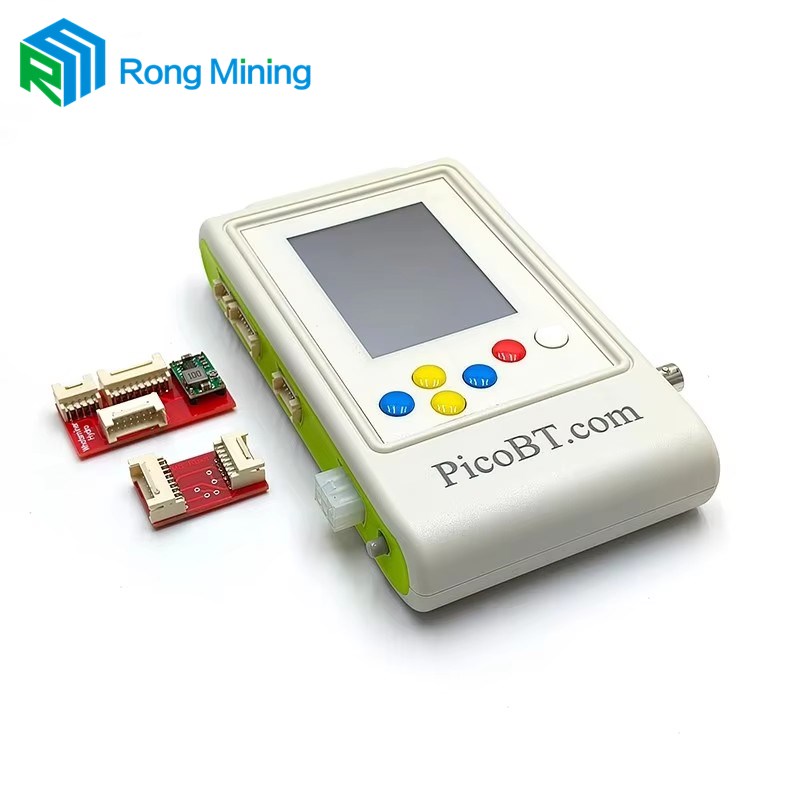
1. The Real Problem Behind Hash Board Failures
An ASIC miner can appear to have a simple problem—low hash rate, an abnormal temperature, missing hash boards, unstable operation, or a failure to start—but the actual cause may be located at different points in the mining system. A technician may need to determine whether the problem originates from the hash board itself, the control board, power delivery, communication, cooling, or another related component.
This is where diagnostic efficiency becomes important. Testing the complete miner every time can consume considerable bench space and technician time, especially when a repair center is handling multiple machines simultaneously. Separating the hash board from the complete miner allows the technician to focus on the component that requires inspection instead of repeatedly rebuilding the entire machine.
- One or more hash boards are not detected.
- The miner reports an abnormal or incomplete hash rate.
- A board repeatedly causes startup or communication errors.
- Hashing performance becomes unstable after prolonged operation.
- A repaired board needs verification before being returned to service.
A dedicated testing fixture does not replace technical diagnosis. Instead, it gives the technician a more controlled environment in which to perform that diagnosis.
2. The Role of a Dedicated Hash Board Tester
A hash board tester is essentially a diagnostic interface between the technician and the board under examination. Rather than relying only on the complete mining machine's normal operating environment, the technician can use a dedicated fixture to test the board separately.
This approach is particularly useful for repair workshops, mining farm maintenance departments, refurbished equipment suppliers, and technicians who process different generations of ASIC miners. The goal is not simply to obtain a pass-or-fail result. A useful testing setup should help technicians establish a logical path from symptom to suspected fault.
Xinjinyi describes its multifunctional testing products as tools for hash board diagnosis and repair, while its product range also includes dedicated fixtures for ASIC chip testing and other mining hardware maintenance applications.
3. Understanding the PicoBT Multifunctional Hash Board Tester
The PicoBT Multifunctional Hash Board Tester is positioned as a multi-model diagnostic tool for ASIC mining hash boards. According to the manufacturer's product listing, the tester supports more than 88 hash board models, including equipment from several Antminer and WhatsMiner series. The listed models include S21XP, S21 Imm, S21, T21, S19K Pro, S19 Pro+ Hydro, M50S, M63S+, M63, M53S++ and M53, among others.
The significance of this design is straightforward: repair facilities often work with mixed equipment rather than one single miner model. A workshop may receive an older S19-family board in the morning and a newer-generation board later the same day. A tester with broad compatibility can therefore simplify equipment management.
The wider Xinjinyi testing range also demonstrates the need for different levels of diagnostic equipment. Its universal K8 test fixture, for example, is described as supporting hashboard testing, voltage/current measurement, and fault detection across Antminer, WhatsMiner, and Innosilicon equipment.
What makes a multifunctional tester useful?
- Multiple model support: One testing platform can serve different mining equipment families.
- Repair-oriented design: The tester is intended for maintenance and diagnosis rather than normal mining operation.
- Bench testing: Technicians can examine a board independently of the complete miner.
- Workflow consistency: Repeated tests can follow a defined diagnostic sequence.
4. Compatibility and Model Management
Compatibility is one of the most important factors when selecting a hash board tester. A tester may be technically capable yet still provide limited value if it only supports the small number of models handled by a particular repair center.
| Requirement | Why It Matters | Practical Consideration |
|---|---|---|
| Model coverage | Determines how many different hash boards can be tested. | Compare supported models with the machines actually handled by your workshop. |
| Stable connection | Reliable connections are essential for repeatable testing. | Inspect connectors and cables before every diagnostic session. |
| Power requirements | Incorrect or unstable power can interfere with diagnosis. | Follow the tester's specified power arrangement. |
| Operating procedure | A clear procedure reduces accidental setup errors. | Use the appropriate model-specific testing instructions. |
It is also important to distinguish between general compatibility claims and the exact board revision being repaired. ASIC mining hardware evolves rapidly, and different revisions can have different electrical or communication requirements. Before placing an order, technicians should confirm the exact miner model, hash board revision, and required accessories with the supplier.
5. A Practical Hash Board Testing Workflow
A controlled workflow can make troubleshooting easier to document and repeat. The following process is a practical framework; technicians should always follow the specific operating instructions supplied with the tester and the relevant miner model.
-
Identify the board.
Record the miner model, board revision, visible markings, and the original machine symptom. -
Perform a visual inspection.
Check for burnt components, damaged connectors, corrosion, contamination, loose parts, and obvious physical damage before applying power. -
Confirm the testing setup.
Verify the correct fixture connection, power arrangement, communication interface, and model selection before starting the test. -
Run the appropriate diagnostic procedure.
Observe communication status, board response, and other available diagnostic information rather than relying on a single symptom. -
Record the result.
Keep a simple repair record containing the board identity, test result, suspected fault area, repair action, and retest result. -
Retest after repair.
A board should be verified again after component replacement, soldering work, chip replacement, or another repair operation.
6. How Testing Helps Narrow Down Faults
Effective troubleshooting is usually a process of elimination. A miner showing low hash rate does not automatically mean that every ASIC chip on the board is defective. Likewise, a board that is not recognized may have a problem somewhere in its power, communication, control, or chip chain.
A dedicated tester can provide a more focused environment for examining the board. Once a board has been separated from the complete miner, technicians can compare its behavior with known-good boards and use the results to decide which area deserves further inspection.
| Observed Condition | Possible Direction for Investigation |
|---|---|
| Board not detected | Check power delivery, communication path, connectors, and board-level circuitry. |
| Unstable operation | Check power stability, thermal conditions, connections, and affected circuit sections. |
| Reduced hashing performance | Investigate ASIC chip chains, power sections, communication, and thermal behavior. |
| Problem remains after component replacement | Repeat the diagnostic process rather than assuming the replacement component is defective. |
These are diagnostic directions rather than automatic fault conclusions. Actual failure analysis depends on the miner architecture, board revision, test results, and technician experience.
7. Improving Repair Efficiency in Mining Operations
For a small mining operator, a single faulty board can interrupt the operation of one machine. For a repair center or large mining facility, the same type of issue can appear across dozens or hundreds of units. In that environment, the efficiency of the diagnostic workflow becomes increasingly important.
A multifunctional tester can help technicians establish a dedicated testing station where boards are inspected, repaired, and verified before being returned to production. This creates a more structured process:
- Incoming inspection: Record the board and the original failure symptom.
- Initial test: Establish the current condition before repair.
- Repair: Replace or repair suspected components according to the diagnostic findings.
- Verification: Test the repaired board again.
- Release: Return only verified boards to the mining fleet.
Xinjinyi states that its testing equipment is intended to help technicians diagnose mining hardware more efficiently, and its K8 fixture is specifically described as helping reduce downtime and avoid repeatedly setting up an entire miner during diagnosis.
8. Dedicated Tester vs. Full Miner Troubleshooting
| Aspect | Testing Through Complete Miner | Dedicated Hash Board Tester |
|---|---|---|
| Setup | Requires the board to remain within the complete machine configuration. | Provides a separate diagnostic environment. |
| Component isolation | Other miner components may complicate troubleshooting. | Focuses attention on the board being tested. |
| Repair workflow | May require repeated assembly and disassembly. | Better suited to a dedicated repair bench. |
| Multiple models | Each machine may require its own normal operating configuration. | A multifunctional fixture can cover multiple supported models. |
| Post-repair verification | Can require returning the board to the miner for confirmation. | Allows a separate test stage before reinstallation. |
The two approaches are not mutually exclusive. A dedicated tester is best viewed as an additional diagnostic tool within a broader repair process. Final verification in the complete miner may still be appropriate depending on the repair and equipment requirements.
9. Key Points to Check Before Purchasing
Choosing a hash board tester should start with the actual maintenance requirements of your operation rather than simply comparing product names. Before purchasing a PicoBT Multifunctional Hash Board Tester or another testing fixture, consider the following points:
- Supported miner models: Make a list of the ASIC models currently repaired in your facility.
- Board revisions: Confirm that the specific hash board versions you handle are supported.
- Testing purpose: Determine whether you need board-level diagnosis, chip testing, voltage measurement, or a combination of functions.
- Accessory requirements: Confirm cables, adapters, power supplies, and other required components.
- Operating instructions: Ask for the latest testing procedure applicable to your board models.
- After-sales support: Technical assistance can be valuable when working with different generations of mining hardware.
- Future equipment: If your repair business regularly adds new miner models, broader compatibility may reduce future equipment replacement.
The PicoBT product listing is particularly relevant to repair operations handling multiple supported models because its stated compatibility covers a wide selection of ASIC hash boards.
10. Maintenance Practices for Long-Term Use
The accuracy and reliability of any testing setup depend partly on how the equipment is handled. A tester should be treated as part of the repair infrastructure rather than as a disposable accessory.
- Keep connectors clean and inspect them regularly.
- Protect cables from excessive bending, pulling, and mechanical stress.
- Keep the testing area free from conductive debris and unnecessary dust.
- Use appropriate ESD precautions when handling ASIC boards.
- Do not use an incorrect power source simply because a connector appears compatible.
- Keep records of frequently encountered board faults and successful repair procedures.
- Confirm compatibility before connecting a new board model to the tester.
Good maintenance practices also make troubleshooting results easier to trust. If the test equipment itself has damaged cables, poor contacts, or an unstable power source, technicians may incorrectly attribute a test abnormality to the hash board.
11. Frequently Asked Questions
Can the PicoBT Multifunctional Hash Board Tester be used for different ASIC miner models?
Yes. The manufacturer's listing describes PicoBT as supporting more than 88 hash board models, including multiple Antminer and WhatsMiner series. Exact compatibility should still be confirmed for the specific board model and revision before testing.
Is a hash board tester useful for mining farm maintenance?
It can be useful when a mining farm needs to isolate faulty boards, organize repair work, and verify repaired components before returning them to service. The value increases when the facility maintains several miner models.
Does a hash board tester replace a complete miner?
No. A tester is a diagnostic and maintenance tool. It does not replace the mining machine's normal control, cooling, power, and operating environment. Complete-machine verification may still be required after repair.
Can technicians use one tester for every hash board?
Not necessarily. Compatibility depends on the tester design, miner model, board revision, interface, and testing method. Always check the supplier's current compatibility list before connecting an unsupported board.
What should be checked before testing a damaged hash board?
Start with the board identification and a visual inspection. Check for physical damage, burnt components, contamination, loose connectors, and other obvious abnormalities. Then verify the correct power and communication setup before proceeding with the diagnostic procedure.
Is the PicoBT suitable for professional repair workshops?
Its broad stated model coverage makes it relevant to workshops that service multiple supported ASIC platforms. The suitability of any tester ultimately depends on the workshop's actual equipment mix and required diagnostic functions.
Can Shenzhen Xinjinyi Technology Co., Ltd. help confirm compatibility before purchase?
Shenzhen Xinjinyi Technology Co., Ltd. supplies ASIC mining equipment and related maintenance products, including hash board testing equipment. Its product range covers hash board testers, ASIC chips, control boards, power supplies, and other mining hardware. For a compatibility check, provide the exact miner model, hash board model or revision, and the intended testing application.
Need a Hash Board Testing Solution?
If your repair center or mining operation is dealing with multiple ASIC models, the right testing equipment can make board diagnosis more organized and reduce unnecessary troubleshooting steps. Shenzhen Xinjinyi Technology Co., Ltd. can help you review the applicable tester and compatibility requirements based on your equipment models and maintenance needs.
Send your miner model, hash board information, quantity, and testing requirements to discuss the appropriate solution and current availability.
Contact Us