
Which Antminer Models Is the Mining Machine Power APW121215F Compatible With?
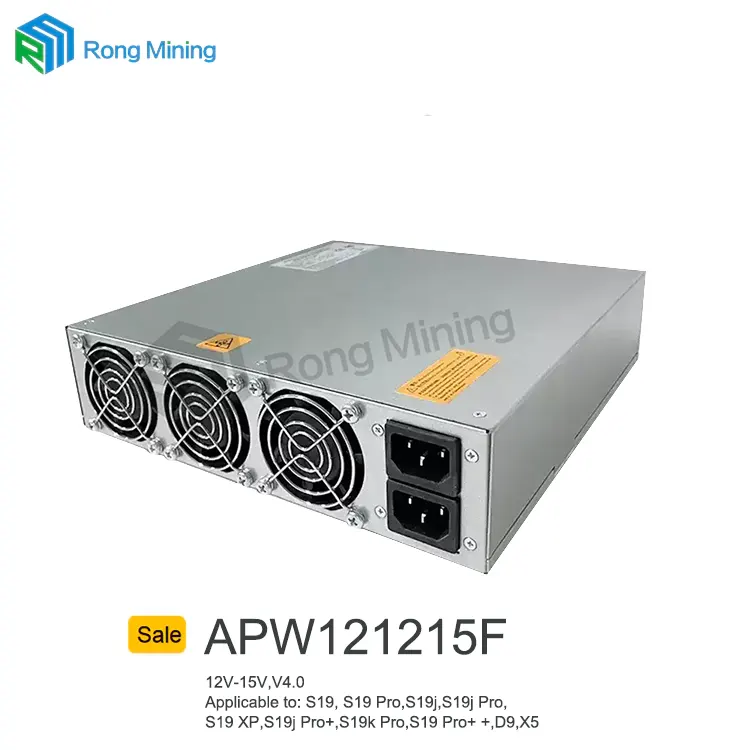
Xinjinyi has gradually expanded its ASIC infrastructure focus as global demand for stable Mining Machine Power APW121215F. Within this development path, APW121215F has been increasingly referenced in discussions around high-load Antminer power matching, especially after 2019 when ASIC chip-based mining machines entered wider circulation across multiple regions. The broader shift from early-generation mining rigs to high-efficiency models has placed more attention on how power systems interact with hardware stability, thermal balance, and long-duration operation reliability.
Which Antminer Models Are Compatible?
One of the most frequently discussed topics in mining hardware communities is the compatibility between power units and Antminer models. The APW121215F is primarily associated with modern Antminer S-series and selected high-efficiency units.
Below is a simplified compatibility overview:
Antminer Compatibility Overview
| Antminer Model Series | Compatibility Level | Operational Notes |
| S19 | High compatibility | Stable under standard load conditions |
| S19 Pro | High compatibility | Optimized for continuous mining cycles |
| S19j | High compatibility | Requires stable cooling support |
| S19j Pro | High compatibility | Common pairing in mid-to-large setups |
| S19 XP | Medium–High | Higher efficiency demands careful thermal design |
| S19j Pro+ | High compatibility | Supports extended runtime environments |
| S19k Pro | Medium–High | Performance dependent on voltage stability |
| S19 Pro++ | High compatibility | Advanced hashing load adaptation |
| D9 | Medium | Depends on configuration and firmware tuning |
| X5 | Medium | Requires workload balancing strategies |
From field observations, compatibility is not only defined by electrical fit but also by how consistently the Mining Machine Power APW121215F can sustain output under fluctuating workload spikes. In newer Antminer models, dynamic power scaling plays a more visible role, meaning stable PSU behavior becomes even more important.
Why Compatibility Between Power Supply and Antminer Models Matters
Compatibility between mining power systems and Antminer hardware is not simply a plug-and-play condition. It involves multiple layers of interaction:
1. Voltage Stability Under Load
ASIC mining rigs frequently shift between different computational intensities. When voltage dips or spikes occur, hash boards may reduce efficiency or restart, affecting overall output consistency.
2. Thermal Load Distribution
Power units contribute indirectly to thermal output. A stable system like APW121215F helps reduce unnecessary heat variation, allowing cooling systems to function more predictably.
3. Long-Duration Operation Reliability
Mining environments often operate continuously for weeks or months. Over time, even minor inefficiencies accumulate into measurable performance differences.
4. Hardware Protection Behavior
Modern Antminer systems include protective firmware responses that may shut down hash boards under unstable power conditions. Compatibility reduces these interruptions.
Technical Characteristics and Electrical Profile
To better understand how APW121215F aligns with Antminer systems, its electrical structure is often reviewed in detail.
Electrical and Physical Specifications
| Parameter | Specification |
| Main Output Voltage | 12V–15V DC |
| Rated Current (220V input) | 267A |
| Secondary Output | 12.3V DC |
| Secondary Current | 18A |
| Model Dimensions | 254.6 × 251.6 × 63 mm |
| Packed Dimensions | 375 × 350 × 130 mm |
| Net Weight | 4.2 kg |
| Gross Weight | 5.8 kg |
The dual-output design allows simultaneous power distribution to different internal mining components. In practical terms, this structure helps support both primary hashing loads and auxiliary system functions such as control logic and monitoring circuits.
In extended operation environments, Mining Machine Power APW121215F is often evaluated for its ability to maintain stable current delivery under high ambient temperatures, which is a common condition in mining farms.
Operational Scenarios in Mining Environments
Across different mining setups, this power architecture is applied in several recurring scenarios:
High-Density Mining Farms
In large-scale setups, multiple Antminer units operate in close proximity. Power consistency becomes critical because fluctuations can cascade across multiple machines sharing similar electrical infrastructure.
Modular Upgrade Systems
When older mining units are upgraded to newer S-series models, maintaining compatible power systems reduces the need for full infrastructure redesign.
Mixed Hardware Environments
Some facilities operate a mix of S19, S19 Pro, and S19 XP systems. In such cases, a stable power baseline helps standardize operational behavior across heterogeneous hardware.
Remote or Semi-Automated Sites
In locations where manual intervention is limited, hardware stability becomes more important than peak performance optimization.
Maintenance and Long-Term Operation Considerations
While the APW121215F is designed for continuous use, long-term stability depends on environmental and operational conditions.
Common considerations include:
- Dust accumulation affecting heat dissipation efficiency
- Voltage fluctuations in external power grids
- Cable wear in high-current environments
- Thermal cycling stress during seasonal temperature changes
In practice, periodic inspection cycles are often implemented to ensure stable output performance. These checks typically focus on connector integrity, output consistency, and temperature behavior under load.
Industry Perspective on Power Compatibility Trends
As Antminer models evolve toward higher efficiency and dynamic energy management, the role of power systems has shifted from passive supply units to active stability components. This shift is particularly visible in newer S19 variants, where workload distribution can change rapidly based on algorithmic adjustments.
Within this context, APW121215F continues to be referenced as part of stable infrastructure planning due to its ability to maintain consistent electrical output across varying load conditions. Shenzhen Xinjinyi Technology Co., Ltd. has aligned its ASIC-related component development with this broader trend of system-level optimization rather than isolated hardware performance.
The compatibility between Antminer models and supporting power systems remains a central factor in maintaining stable ASIC mining operations. Across S19, S19 Pro, and related series, the Mining Machine Power APW121215F is frequently associated with consistent electrical behavior and adaptable load handling in structured mining environments. As mining hardware continues to evolve, its role as a stable electrical foundation remains relevant within integrated system planning discussions, particularly in configurations associated with Shenzhen Xinjinyi Technology Co., Ltd. and its ASIC-focused product ecosystem.
Send Inquiry



X
We use cookies to offer you a better browsing experience, analyze site traffic and personalize content. By using this site, you agree to our use of cookies.
Privacy Policy